The 2-Minute Rule for drilling mud loss
Wiki Article
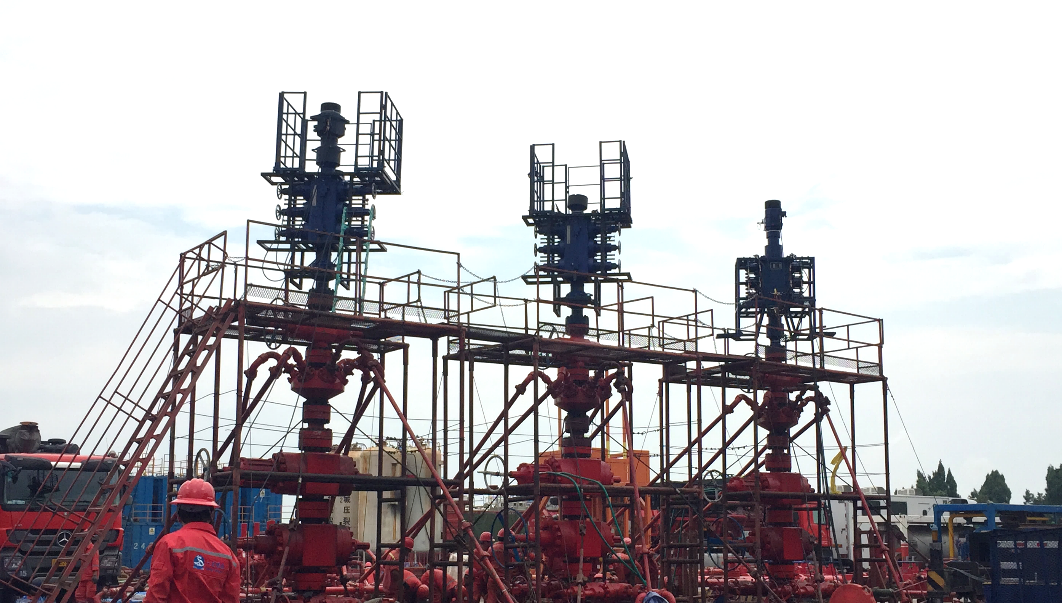
Numerous selections are available when lost circulation occurs, dependant upon the severity.[four] Losses may be controlled by raising the viscosity of your fluid with bentonite and/or polymers, or Together with the addition of other additives, which usually involve natural plant make a difference. Whole losses is usually regained via conventional usage of elevated viscosity and additives, or via utilization of unconventional approaches such as pumping of enormous organic and natural particles (like kenaf), paper, and huge mica flakes having a higher viscosity fluid. If full losses manifest and circulation can't be regained, quite a few selections can be obtained, depending on the operational specifications and depth remaining drilled in relation to wanted generation geological zones.
By assessing its influence throughout all characteristic mixtures, SHAP gives a constant, mathematically audio rationalization of model behavior, clarifying how individual variables condition the output.
Figure 6b demonstrates that, during circulation, drilling fluid flows downward Within the drill pipe. Owing for the fairly smooth inner wall of your drill pipe, frictional pressure losses are minimum. Also, gravitational possible Strength converts to kinetic Vitality for the duration of downward circulation, causing a progressive boost in fluid velocity along the drill pipe. With the bit nozzle exit, movement constriction induces substantial frictional pressure losses, further more accelerating fluid velocity near the wellbore bottom. Conversely, as fluid exits the drill pipe and enters the annulus for upward move, velocity step by step decreases as a result of high wall roughness along with the conversion of kinetic Power back to gravitational prospective energy. The upward velocity is substantially reduce compared to the downward velocity in the drill pipe. Subject observations indicate that a whole drilling fluid cycle comprises downward and upward phases, with the upward section length noticeably exceeding the downward stage. The velocity distribution in Determine 6b points out this phenomenon. Just before loss initiation, no fluid flows inside shut fractures; Hence, velocity continues to be zero in the course of.
The overwhelming majority of drilling fluids are non-Newtonian fluids, for which various rheological models are proposed. The Herschel–Bulkely design adds an extra term to the facility-law product, and is particularly hence A 3-parameter rheological design.
Picking out the stepped pressurization manner, the indoor and on-website drilling fluid lost control performance matches perfectly, and also the analysis results are fantastic
In Equation 12, denotes the standard level of the variable Ij, while Z and represent the response variable and its normal. Determine 7 depicts the relative implication of assorted factors over the mud loss volume, that contains gap sizing, mud viscosity, differential tension concerning the wellbore and formation, and mud sound content material. The effects point out that mud viscosity exerts one of the most pronounced effect on the mud loss volume, characterized by a correlation coefficient (R-price) of �?.
For fractures of equivalent top and length, the affect of wedge-shaped fractures with various inlet/outlet width ratios on the loss behavior of drilling fluid is explored by keeping the fracture inlet width continuous and transforming the fracture outlet width. As revealed in Figure 22, the numerical simulation results of drilling fluid loss in wedge-shaped fractures by having an inlet width of five mm and outlet widths of one–five mm are introduced. Beneath the same overbalanced strain, the instantaneous loss charge of drilling fluid in fractures with distinctive outlet widths is largely a similar, along with the curve is really a straight-line section. The steady loss price and cumulative loss of drilling fluid increase with the rise in the outlet width in the wedge-formed fracture, and the slope with the curve progressively decreases (Figure 22a). The distinction between the inflow and outflow of drilling fluid and the full quantity adjust on the drilling fluid (improve in liquid degree height) are widespread ways to determine drilling fluid loss. Comparing the engineering logging information when unique losses take place, it truly is located that, once the First difference between the inflow and outflow of drilling fluid read review is equivalent after which you can slowly differentiated, the wedge-formed fracture with equal inlet width and unequal outlet width might be one of many brings about of the phenomenon. In step with the craze of BHP alterations, the alter in standpipe force reflecting the severity of loss improves with the rise in outlet fracture width (Figure 22b,c).
The loss types of fractured development is often divided into induced fracture loss, fracture propagation loss, and normal fracture loss. By amassing the sector engineering geological characteristic details on fractured development and referring to your dynamic design of drilling fluid loss, the drilling fluid loss rate–time characteristic curve from the loss model is produced as being the characteristic format, the info over the drilling fluid loss fee in the early phase of drilling fluid loss inside the perfectly being decided are recorded, the drilling fluid loss rate–time curve is drawn, and the sector drilling fluid loss price–time curve is compared While using the characteristic charts of different loss varieties to find out the drilling fluid loss sorts in fractured formation.
Sensitivity Investigation unveiled that mud viscosity and reliable information inversely impact mud loss, whilst gap dimension and differential tension positively contribute to it.
In unmanageable ailments, sidetrack over the loss zone to resume drilling inside of a stable trajectory.
Third stage—the steady loss phase of drilling fluid: As revealed in Figure 8a, the return stream of drilling fluid while in the annulus step by step rises And at last remains constant. In contrast, the curve of loss level of drilling fluid slowly decreases till it can be flat. At this time, there is a continuing distinction between the return flow while in the annulus and the drilling displacement, setting up a different dynamic balance. The curve on the cumulative loss of drilling fluid rises linearly, so the overall quantity of drilling fluid in the sphere decreases at a continuing rate, and also the liquid degree decreases uniformly. The strain reaction through the loss course of action corresponds to the adjustments in move fee in all places. Determine 8b displays the alterations in a variety of pressures eventually during the complete loss approach. The force curve from the fracture rises slowly but surely and step by step results in being flat. This can be a result of the lower during the invasion speed of drilling fluid within the fracture and the rise in the general loss volume. In the event the drilling fluid flows out of your regular fracture outlet, the amount of drilling fluid within the fracture isn't going to adjust, plus the strain in the fracture stays frequent. The BHP and standpipe pressure curves also increase and after that gradually grow to be flat.
Observe: An precise document of all volumes and pills pumped need to be saved in order that hydrostatic head is often calculated.
When the conventional laboratory experiment process is adopted, the evaluation approach to the lost control potential with the organic fracture sort loss plugging slurry formula is adopted, exactly where the worth of X is often decided as 2 by referring to Table 1 With all the stress bearing ability of four.
By combining methodological rigor with realistic field facts, this investigation provides a much more correct and generalizable framework for mud loss prediction, thus maximizing choice-making, operational performance, and threat mitigation in drilling techniques.